Showing posts with label fruit. Show all posts

Tuesday, July 8, 2014

Backyard Before and After: Part 1

The yard is still a work in progress and there will probably end up being like 30 before and after entries, but this is the first one complete right now: the southwest corner where you enter the backyard when following the sidewalk around the garage. 

This is what the area looked like when we walked into the backyard on a visit at the end of May 2013:

May 2013
I used some of these photos on a 'before and after' post last year to show how fast things grow in Portland in the spring, since it was only a month between the shots above and below.

Besides filling with weeds, this area became overgrown with the blackberry plants that were there, and all the offshoots that grew from them over the time the house was vacant. There were also about a dozen small cherry trees growing here. We assumed they popped up from birds dropping seeds from cherries picked off a neighbor's tree next door. While we'd like a cherry tree, that neighbor's tree is full-sized. A dwarf cherry variety would be a must for our yard space, so these trees had to go.

April 2013
During some of our summer visits and soon after we moved, we started clearing this area. I took down the chicken wire fencing between the wood fence and around the clothesline. I cut down the cherry trees to dry for firewood and pulled out the roots. We never figured out what the plant shown below was since we never saw it flower or fruit, so we pulled it out and removed the wooden box and trellis.
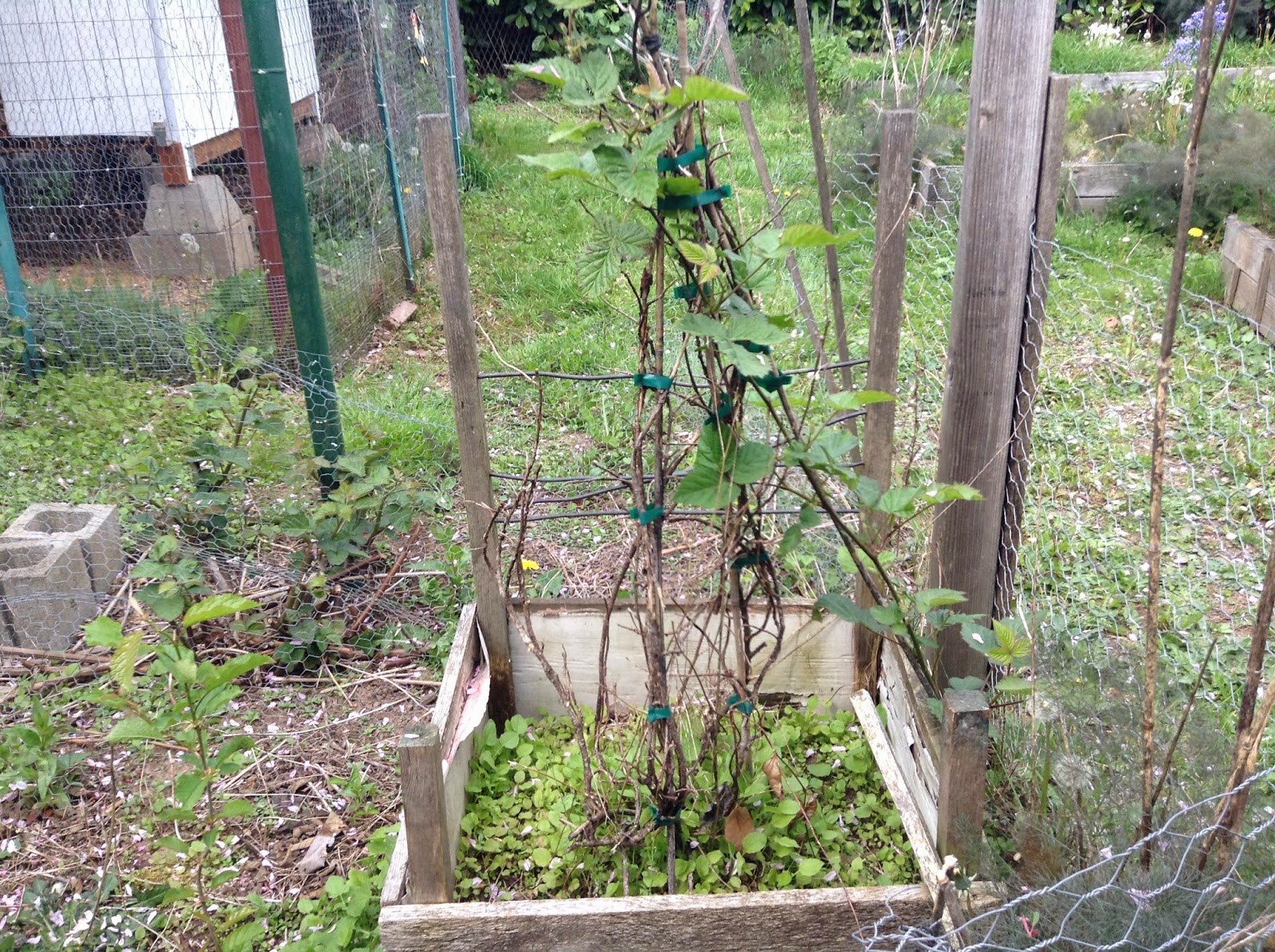
April 2013
Over the winter I cleared out remaining fence scraps, concrete blocks and other debris, pulled weeds, and tilled the area along the fence, as seen below.

January 2014 
While the blackberries were still dormant, I transplanted them. Added trellises, pulled weeds, tilled the entire area and spread grass seed once it started getting warmer. And here is what it looks like now:

June 2014
Yeah. HUGE difference.

In the earlier photos you could barely see that there were pear trees in there. Nick did a lot of pruning since they'd been neglected for so long, so they are all nicely-shaped now and all growing an incredible amount of fruit.

We definitely wanted to keep the blackberries, just a little more controlled and deliberately placed. Fortunately the main plant was already in a great location next to the clothesline, so we kept it there, just adding a trellis so we could train the branches to grow up instead of out. It looks much cleaner, takes up less space, and the berries will be more easily accessible for picking from any side.


I wanted to keep a few of the smaller blackberry offshoots as well to increase the fruit yield, so I made a plan to transplant them while still dormant to a new location along the fence, selecting the largest of the offshoot systems and composting the rest. I attached the trellises along the fence area between the two pear trees and transplanted those root systems. These trellises and the trellis attached to the clothesline we found in other areas of the yard, so those were existing. We always try to reuse or re-purpose existing items for projects before buying anything new.

As you can see below the newer plants are still fairly small, but should get bigger and bigger every year, each eventually getting as big as the mother system above. Like our other fruits and berries, I'd like to have enough blackberries to eat some from the bush, use some fresh picked for baking, some to freeze, and some to can as a compote, probably making a plum/blackberry mix to make them go further. We're really looking forward to being able to add stuff we grew ourselves to our meals year-round!


And here's another view of the same area, before and after:

May 2013
June 2014

Sunday, May 18, 2014

Patio Planter & Raspberry Shortcake

On our drive back to Portland from the olive grove tour last fall we stopped at this locally-owned nursery/garden center near Sherwood, Oregon because it was advertising a Japanese maple sale, and we wanted one of those for the garden area outside of the living room window. While there we looked at what else they had and there were several small potted raspberry plants that were fruiting. They were call 'raspberry shortcake' and they were delicious! We didn't buy then since it was the end of the season, but made a mental note to come back and get some for the spring.

Our house came with a bed of established golden raspberries, which I'd never had before because they are too fragile for transport so they may occasionally be found at a local farmers market, but that's it. Raspberries are y favorite berry, so I wanted to have several varieties. Raspberry shortcake is a dwarf variety, which meant they would do well in a planter and make a great green addition to our patio living room plan.

This project started with the purchase of a storage bench in the Ikea Applaro outdoor furniture line, which is what we picked for the patio. I put the bench together, leaving off the top lid piece to get what you see below:

Ikea Applaro storage bench
Then I used a staple gun and some very thick tarp (from a torn Burning Man shade structure) to create a sturdy liner:
 

Before filling it with soil, I made a few drainage holes in the bottom of the tarp. Then added the dirt and the two raspberry plants we picked up at the end of February when we passed the same nursery again on the way back from a beach trip:

Planted March 15th, 2014
It looked really sad. But just two months later last year's canes are full of leaves and ripening berries and new growth has filled in all around, which will provide a second round harvest later in the summer:

May 16, 2014
So perfect for a planter. These little guys would have been completely overrun by the giant raspberries in the garden box. We did have some extra space in there so I ended up planting an additional 3 varieties: Newburgh, Amity, and some starts of an unknown variety from a friend's garden. And it really does work perfectly as a planter on the patio, where I plan to spend many summer evenings relaxing on the outdoor couch with a bowl full of just-picked raspberries:

Pierre also enjoys relaxing on the patio
Update: June 12, 2014

We've been getting berries for about a week! Just 3 months between emergence from dormancy to this:


Sunday, March 30, 2014

Making Room for Strawberries

We've been making a lot of changes in the yard and one that is ready for documentation is the removal of bamboo from this garden bed and making it a more useful space for us. I assume that whoever planted the bamboo in the middle of this garden bed was doing so for kind of a privacy screen, because there is a small window on the second floor of the house next door.

Bamboo garden box when we moved in
We decided we'd rather use this garden bed for strawberries, but didn't get rid of the bamboo entirely: I transplanted 6 large pots full, located in between the bed and the fence. I really like bamboo, but I needed it to look as if it were placed more purposefully, and this arrangement still allows for a bit of taller natural privacy at this location along the fence.

I used about half of the existing bamboo, which was all I was able to easily dig up. The larger, more dense clump in the center had deeper roots and was too difficult to separate out. So I listed the remaining bamboo on the Portland Craigslist free section, and a guy was at our house within a few hours to dig out the rest of it and take it with him, leaving a really nice and empty garden box:


Since we planned to use this garden bed for strawberries, it made sense to remove the upper bed section and use just the lower. The upper section had started rotting at the edges, so the short ends pulled off easily on each side. As you can see, the top bed wasn't completely full, but before anything else I had to remove a lot of dirt and level the remaining soil to just below the lower bed line. Then I took a hammer and removed the small pieces of wood holding the longer side on, and removed that. I left the fence side plank on for now, but may remove it later. It's not really in the way there and that cuts down on wood waste if we can't find another use for these. In the photo below you can see the old boards leaning up against the shed on the left, which we are planning on getting rid of by also listing it on Portland's Craigslist free section.

We used some of the extra dirt to fill the raspberry bed and topped off two of the planned vegetable garden beds (the only 2 currently weeded and now ready for planting). I shoveled the remaining soil onto a tarp and into some pots, which we'll need once the rest of the garden beds are cleared of yard debris and weeded.

Strawberries planted
Amongst other things, I finished the extra dirt removal, took off the upper bed planks, and planted the strawberries on a single, 65+ degree Sunday in late March. The strawberries I'd purchased at Portland Nursery the Friday before on my way home from work. There are about three rows each of the three varieties I selected: Albion, Benton, and Quinault. I spent some time at the nursery reading all of the tags and decided on those three for best length of fruiting through the spring, summer and fall. We probably won't have much fruit on them this year  since they are just establishing and we're supposed to pinch off the flowers to help the plant grow larger and spread. Next year though, we'll have a very nice crop!

Update: September 2014. Pretty much all of the transplanted bamboo died, so I cut it all down! Still have to throw the roots in the compost bin and find a new place for the remaining soil. That will be a project for spring!

Saturday, February 22, 2014

The Pink Pearl

Nick and I went with some friends on a local winery tour last fall, and at one of the tastings there was a selection paired with apple slices that were such a bright pink that I thought maybe they'd been soaked in wine. I asked about the variety and was told it was a "Pink Pearl."

The inside of a Pink Pearl apple
After doing some research and finding they aren't very common to find for purchase, obviously the answer to this problem was to grow our own tree. There weren't a lot of places online that carry the variety and those that do appear to sell out quickly, so I put in an order right away.

The place I purchased my tree, Bay Laurel Nursery, doesn't ship right when you order. They allow you to select delivery date ranges in the early spring based on when the best time to plant is in your specific zone, so the tree arrives near the end of its dormant period and ready for transplant.

There was a slight delay in getting my tree as UPS fucked up and delivered to a completely wrong address several miles away, where some jerk signed for it even with the wrong address and name. On their third attempt to retrieve the package, UPS finally succeeded and got it to me--5 days late. I was worried a bit about it being in the box for so long, but since it was dormant, it was fine.

The area I chose for this tree is this little cove in the most south/eastern corner of the back yard:

Before
When we bought the house, the above is what this area looked like. Right off the photo on the left side is the east fence gate, and to the right is the house. This space wasn't being utilized well. A couple random tree seedlings were coming up, there was a large bush of dead grasses of some kind, and a cute but overgrown non-deciduous bush that I haven't identified. The latter was close enough to the house to be out of the way and nice enough to keep, but the tree seedlings and dead grass bush had to go.

At some point over the winter I took the hand saw to the seedlings. I also removed the random chicken wire and other junk. When the Pink Pearl arrived I prepped the rest: dug up the dead brush and pulled up all the long grass and ground covers. Nick helped dig up the roots from the previously-removed seedlings. After everything was cleared out I used the rototiller and turned all of the soil.

After
After moving the tree around to decide where best to place it, I dug a large hole and filled in around the roots. It's several feet from the fence on both sides so it should have plenty of room to grow up and out. With the sun high in the sky over the summer, it should have plenty of light where it is.  

Tree planted
There were a few fuzzy buds on this little guy when I planted it. I'll add some more photos when it has some leaves and blossoms on it this spring. It's only about 2 1/2 feet tall now, so I'm looking forward to seeing how much it grows. And maybe we'll have a couple of apples in the fall!

Saturday, February 8, 2014

Gainey Pots and Indoor Plants

With south-facing floor-to-ceiling windows and such a big living room space, adding a few indoor plants was an obvious must. Especially after scoring two large Gainey pots on Craigslist. I wanted to have at least one fruiting tree, since our entire space is so much about functionality. The first was an easy choice - a lime tree!

After doing some research on different varieties and finding out which grow best indoors, I decided on a 3-year old Bearss lime tree, which we purchased back in early October from Four Winds Growers. It's a seedless variety, and when ripe we'll be able to pick limes right from the tree in the living room and add to a rum and coke, Nick's famous tacos, or just a glass of water.

It began blossoming in mid-January, and here's a picture of it on February 1st:


I selected the matte black planter for the lime tree, which is my favorite of the two Gainey pots. It looks a bit funny because the tree is only about 2 feet tall right now, but it will definitely grow into it. The Bearss lime is a semi-dwarf variety, which means it can get up to about ten feet tall. We'll probably let it grow to around the top of the window. And there's a plant caster with wheels underneath the pot to make it easier to move if needed.

I was really surprised at the number of blossoms on such a small tree. Obviously they won't ALL turn into limes, but there are easily over 50 of them on this little guy already. Here's a closer look at the top cluster:


I liked the idea of having the window framed by plants on each side, and really wanted another fruit of some kind that wouldn't do well outside here (at least not year-round). We considered avocado, pomegranate, and another variety of citrus, settling on a clementine tree. Finding true clementines in the store is sometimes difficult. I would like an avocado tree, but there are several cold-hardy varieties that grow just fine outside in the northwest, so that's what we will get if/when we decide to get one of those.

The grower where I found my lime tree doesn't sell clementines, so I just looked around for a good deal. Once ordered, the clementine tree took awhile to arrive because of a snowstorm in the midwest, and it was pretty much dead on arrival. The company does have a replacement policy and did send me a new one, though it seemed to take threatening to contact my credit card company to reverse the charge to hear back from them, claiming they hadn't gotten my earlier email. So I'm not going to name the company I bought from. Also they've sent me so many spam emails since my purchase, while I've had zero from Four Winds.

Still, once they sent my replacement clementine it arrived quickly AND was blossoming, which was great! It's a 5-6 year old plant and quite tall:

We also have a little aloe plant at the base of the clementine
You can see in the above photo the second Gainey pot, similar to the other but a glossy black instead of matte. I don't like the shiny finish as much as matte, so from most views within the room it's partially hidden behind the Plycraft chair.

The trunk and branches are pretty thin but will thicken up over time. There was a pretty good-sized unripe clementine on one of the branches upon arrival and it made that branch droop over a lot, so I'm not sure how it will handle mass fruiting. This one has quickly gone from having a few blossoms to, like the lime tree, having at least 50 in clusters all over.

Closer look at one side of clementine blossoms
I've been pollinating both of the trees with a small paintbrush since there aren't any bees around to do it. We'll see over the next few months how well that worked.

The final indoor planter we needed to find an inhabitant for was the pot and stand we bought from Modernica. With the two larger indoor pots being used for fruit trees, this smaller one was perfect for a purely decorative plant. We perused the indoor/tropical section of Portland Nursery and fell in love with this dracaena marginata, or Dragon Tree. It's the 'colorama' variety, so instead of solid green fronds it has green and pinkish-red ones. Since this matte black pot matches well with the matte black Gainey planter, those are the most prominently featured within the living room. The dragon tree and its beautiful pot and stand looks perfect placed between the fireplace and the hutch.


We also recently found 2 smaller brown Gainey pots at Hawthorne Vintage in Portland, but those will be used outside on the patio, plants to be determined.


Sunday, November 17, 2013

Digging up and Moving an Apple Tree


I love that our yard is has some established fruit trees and berries. It's definitely one of the things we were looking for in property. Unfortunately that meant not getting to choose where the previous owners had planted those things. Most of it is fine, but for some reason there was a young semi-dwarf Pink Lady apple tree purposely planted in the middle of a garden bed full of golden raspberries. I thought that was pretty odd, but wasn't sure at the time whether we'd want to keep it there or move it. 

Here is a photo of that bed area from mid-summer. In the bed on the right you can kind of see the apple tree in with all the raspberries - it's the tall thing in the middle. 


Now that fall is here, it was time to make that decision. The younger a fruit tree is, the easier it is to transplant, and fall is the time to do it because they are entering dormancy. After brief deliberation, we decided to go ahead and move it nearby to the space between the the two garden beds, which we briefly used for tossing weeds during our first weekend of yard clean up. Most of those weeds had deteriorated nicely into compost soil, some of which I shoveled into the nearby beds.

Here's that area once I'd cleaned it out.


I found something strange when I was cleaning out this space: tile. There were almost a dozen pieces of tile laying between the beds, covered by dirt and grass and then the weed compost pile. Someone's attempt at preventing weeds or??? Not sure. But I used all of them to cover the compost which covered the weeds in the raspberry bed, trying to smother them out.


I also found two old stumps and root balls back in this area, nearer to the fence. Roots are so much easier to dig out when they've been dead for a very long time! This big thing was hardly any work.


Here's the Pink Lady in the raspberry bed pre-move:


And here it is in it's new location:


I forgot to take a picture of it, but I tilled this whole area down as far as I could go before digging the hole. Easily dug up the tree since it's still young and the roots aren't too large, and moved it over. I mixed in some of the soil from it's original planting with the new stuff, staked it to keep it straight, and watered. Now to see how well it handles the winter and then grows in the spring.

I'm really happy we decided to move it. It has it's own space now and will be easier to access for picking/pruning. This was a fun project, and because it was really nice for the past few days, it was a great break from doing things in the house.

Wednesday, November 13, 2013

New Addition to the Yard: Olives!

Since Portland's climate is so mild it's considered Mediterranean, we brainstormed about what kinds of additional plants we would like to have that might grow here. Nick said he'd really love to have some olive trees, so I did some research online and found that olives do in fact grow here. I even found this website, which is completely dedicated to growing olives in Oregon. They even have grove tours, and the following weekend was the last of the season, so I emailed them to get on the list.

Here is a photo of a row of their olive trees, which are really more like large bushes:

These olive trees are about 8 years old

This is a small family-owned grove located about an hour southwest of Portland. All of the information anyone could possible want about growing olives in Oregon is on the website. The guy who gave us the tour has tried all kinds of varieties and sells established cuttings of the ones that grow the best here.

We decided it would be really fun to grow our own even though it will take years to get a large harvest. Fortunately they are really easy. The grower said he doesn't water them because there is enough rain year round here and that he doesn't even prune them, though that's something we'll likely do to keep them looking clean and under control. 

They had several dozen varieties to choose from, and we decided to buy a single start of three different cultivars, which gives us ample opportunity for cross-pollination. Below are our olive babies, which are still doing great in their pots a month after we brought them home. The three kinds are Pendolino, Amfissa, and Santa Catarina. They are all table olives, which means we will cure them and eat them whole. The Amfissa and Santa Catarina olives are large and green, while the Pendolino are a smaller, darker variety. Chopped and mixed together they will make a great homemade tapenade.


Spring is the time to transplant these guys, so they will remain in their pots over the winter. Then we will plant them in the front yard near the street where they will all receive direct south/east sunlight, which is best for heavy olive production.